7 Proven Strategies to Reduce Gym Member Churn in 2026
If you run a gym, studio, or fitness facility, you already know the sting of member churn. A member signs up full of motivation in January, tapers off by March, and quietly cancels by June. Multiply that by dozens — or hundreds — of members, and you’re looking at a revenue leak that no amount of marketing can plug.
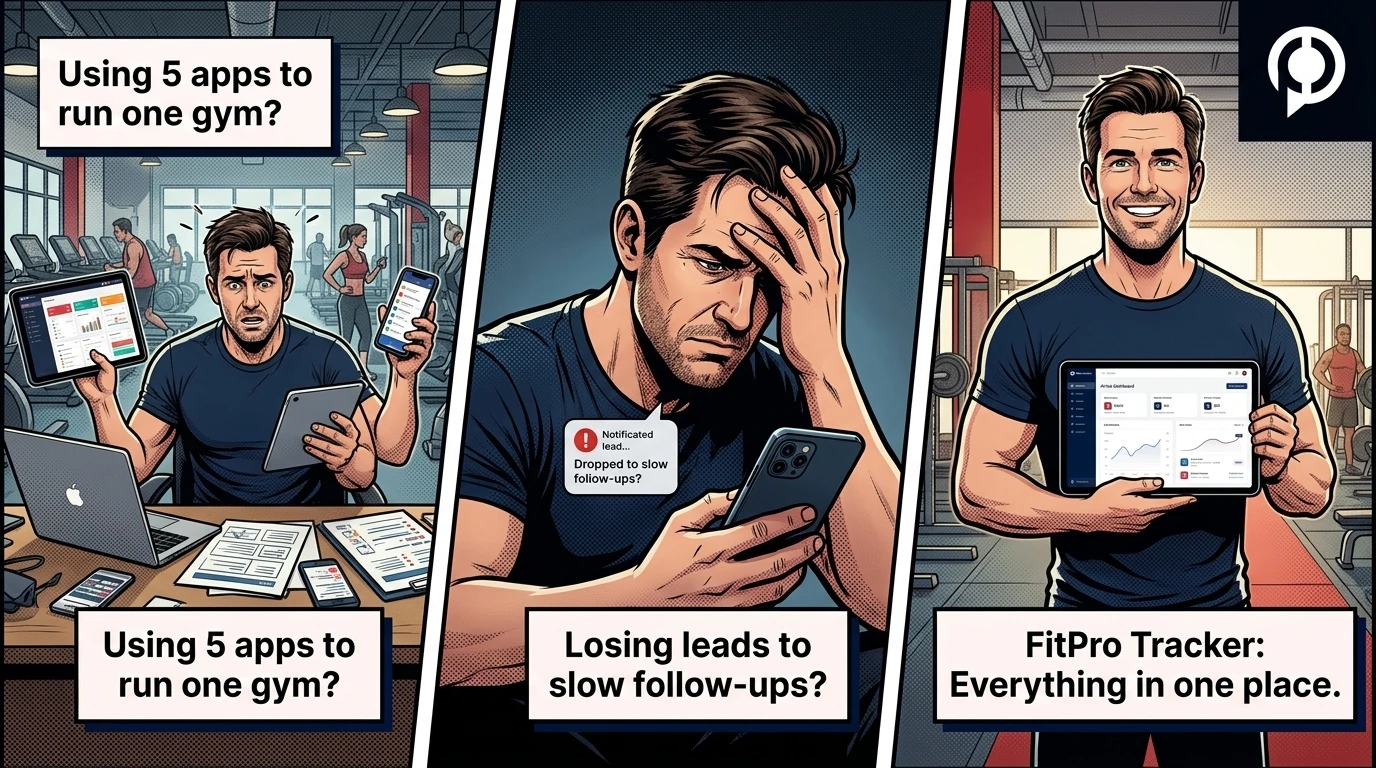
The numbers are sobering. The average gym experiences annual member churn rates between 30% and 50%, according to industry benchmarks from IHRSA and ClubIntel. That means if you have 500 members, you could lose 150 to 250 of them this year alone. And here’s the kicker: acquiring a new gym member costs 5 to 10 times more than retaining an existing one. When you factor in marketing spend, sales labor, and onboarding time, each lost member represents far more than just a cancelled monthly fee.
But churn isn’t inevitable. The gyms that are winning the retention game in 2026 aren’t doing anything magical — they’re being systematic. They use data, automation, and genuine human connection to keep members engaged long after the new-member excitement fades.
Here are seven proven strategies you can implement right now to reduce gym member churn and build a community that sticks around.
1. Automate Personal Touch Points
Here’s a paradox: the most “personal” moments in your member relationships should be automated. Not because you don’t care, but because consistency matters more than spontaneity when it comes to retention.
Think about the moments that make a member feel seen:
- A birthday text message — not a generic email, but an actual SMS that hits their phone on the morning of their birthday.
- Milestone celebrations — “Congratulations on your 100th workout!” or “You’ve been a member for one year today!”
- Check-in streak recognition — “You’ve checked in 5 days in a row. That’s dedication.”
These micro-interactions create an emotional bond between the member and your facility. Research published in the Journal of Service Research found that customers who feel an emotional connection to a brand have a 306% higher lifetime value. In the gym context, members who feel remembered stay longer — period.
The problem? No gym owner has time to manually track 400 birthdays, workout milestones, and check-in streaks. That’s where automation becomes essential. Gym management platforms like FitProTracker let you set up automated SMS and email campaigns triggered by specific member events — birthdays, attendance milestones, membership anniversaries — so every member gets that personal touch without adding hours to your staff’s workload.
The key is to make automated messages feel human. Use the member’s first name. Reference specific achievements. Keep the tone warm and conversational, not corporate.
2. Track Attendance and Intervene Early
By the time a member calls to cancel, the decision has already been made. The real battle for retention happens weeks or even months before that phone call, during the quiet period when attendance starts slipping.
The data tells a clear story: members who visit fewer than 4 times per month are significantly more likely to cancel within the next 90 days. A study by Retention Guru found that a member who goes from 3 visits per week to zero has an 80% probability of cancelling if no intervention occurs.
The strategy is simple but powerful:
- Set a 7-day no-check-in trigger. If a member hasn’t visited in a week, automatically send a friendly “we miss you” text. Keep it light: “Hey [Name], we haven’t seen you at the gym this week. Everything okay? We’d love to see you back — your next workout is waiting!”
- Escalate at 14 days. If there’s still no check-in, trigger a follow-up with a personal offer — a free PT session, a class invitation, or simply a staff member reaching out directly.
- Flag at 30 days. Members inactive for a full month should be on your manager’s radar for a personal phone call.
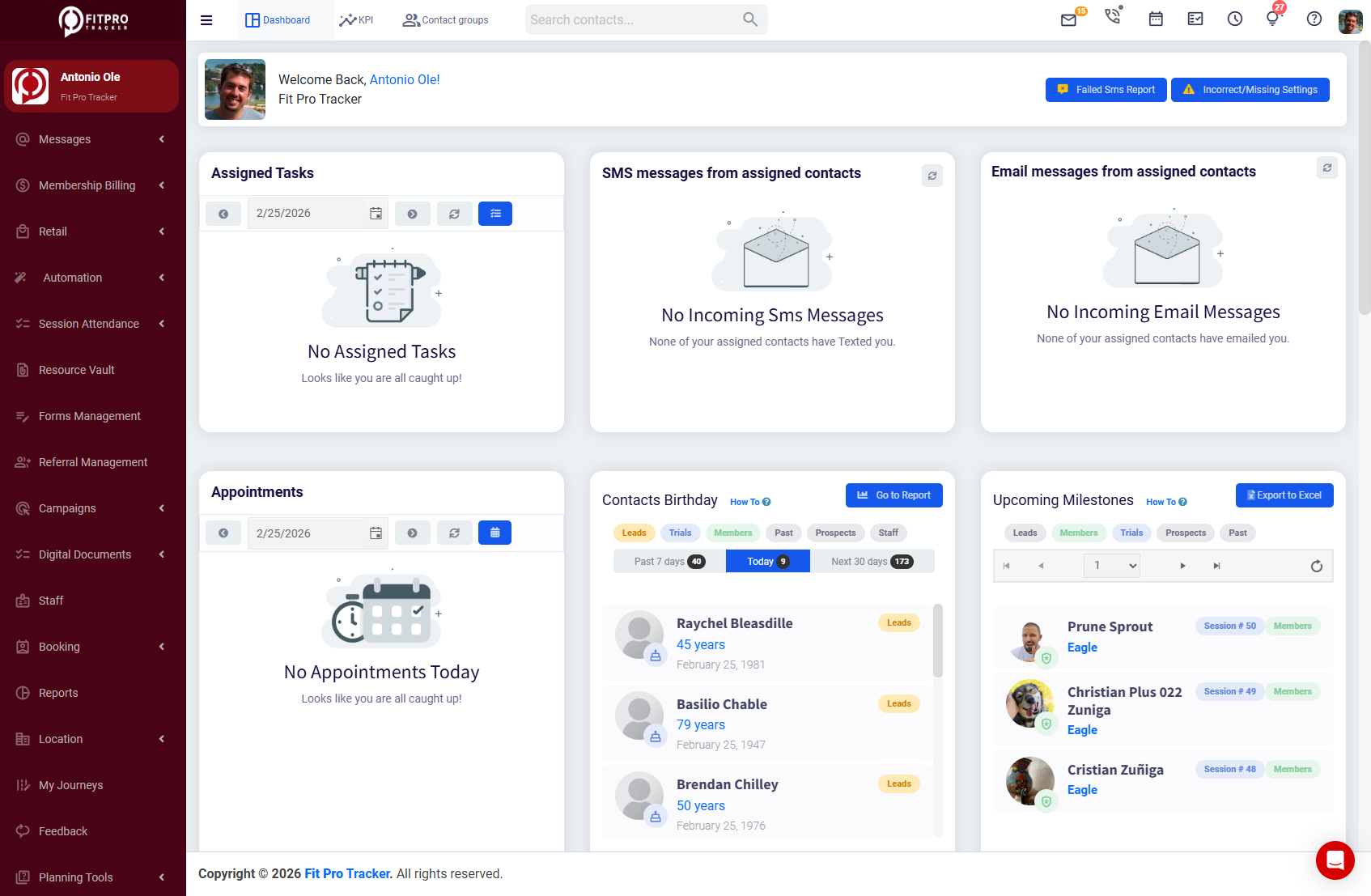
This tiered approach works because it catches disengagement early, when the member still has some connection to your gym. With check-in tracking and automated re-engagement campaigns — features built into platforms like FitProTracker — you can run this entire sequence on autopilot while your staff focuses on the members who are physically in your facility.
Don’t wait for the cancellation request. By then, it’s too late.
3. Build Community Through Your App
The gym experience no longer starts and ends at your front door. In 2026, your members expect a digital extension of your facility — a place where they can book classes, message staff, check schedules, and track their fitness journey. If you’re not providing that, a competitor is.
But a member-facing app isn’t just a convenience play. It’s a retention engine. Here’s why:
- Booking creates commitment. A member who books a class in advance is far more likely to show up than one who vaguely plans to “go tomorrow.” The act of scheduling creates psychological buy-in.
- Messaging builds relationships. When members can directly message their trainer or front desk through your app, they feel connected to people, not just a facility. And people don’t cancel on people they know.
- Progress tracking creates investment. Every workout logged, every class attended, every goal tracked in your app becomes a sunk cost the member doesn’t want to walk away from.
The fitness facilities seeing the highest retention rates in 2026 are the ones offering branded client apps where members manage their entire gym experience from their phone. FitProTracker’s client booking app, for example, combines class scheduling, direct messaging with staff, and progress tracking into a single branded experience — giving members a reason to interact with your gym every single day, even on rest days.
Connected members are retained members. The more digital touchpoints a member has with your gym, the stickier their membership becomes.
4. Fix Failed Payments Before They Become Cancellations
This one might surprise you: a significant portion of “cancellations” aren’t actually members choosing to leave. They’re failed payments that never get resolved.
Industry data suggests that up to 15% of recurring payments fail each month due to expired credit cards, insufficient funds, or bank-related issues. If your system simply lets those failures pile up, you’ll eventually write off those members as cancelled — even though many of them never intended to leave.
The fix is straightforward:
- Automated past-due reminders. The moment a payment fails, trigger an SMS and email notifying the member. Most people don’t even realize their card expired.
- Multiple retry attempts. Configure your billing system to retry failed payments at intervals (e.g., 3, 7, and 14 days after failure) before flagging the account.
- Make updating payment info easy. If a member has to call your front desk during business hours to update a credit card, many simply won’t bother. Give them a self-service option.
This is pure revenue recovery with minimal effort. A gym with 500 members at $50/month that recovers even 5% of failed payments saves $15,000 per year — money that was walking out the door silently.
Modern gym management software handles this automatically. FitProTracker’s automated billing workflows send past-due reminders via SMS and email, retry failed payments on a schedule, and give members a frictionless way to update their payment details — all without your staff lifting a finger.
5. Create a Referral Program
Referral programs aren’t just a member acquisition strategy. They’re one of the most powerful retention tools in your arsenal.
The data is compelling: members who refer at least one friend have up to 4x higher retention rates than members who join through ads or walk-ins. Why? Because referring someone is an act of social investment. When a member brings a friend to your gym, they’re putting their reputation on the line. They’ve told that friend, “This place is great.” Now they have a reason to keep showing up — accountability, social connection, and the desire to validate their recommendation.
An effective gym referral program should be:
- Simple. One clear offer: “Bring a friend, you both get [reward].” Don’t overcomplicate it.
- Rewarding for both parties. The referrer and the new member should both benefit. A free month, a discount, branded merchandise, or a free PT session all work well.
- Easy to share. Give members a unique referral link or code they can text to friends. Remove friction.
- Promoted consistently. Don’t just mention it at sign-up. Include referral prompts in your automated campaigns, app notifications, and in-gym signage.
The beauty of referrals is the compounding effect: retained members bring in new members who are themselves more likely to be retained, creating a virtuous cycle that drives growth and reduces churn simultaneously.
6. Track Progress Visually
The number-one reason members cancel gym memberships? “I wasn’t seeing results.” But here’s the thing — most of those members were making progress. They just couldn’t see it.
Without objective measurement, members rely on the mirror and the bathroom scale — two notoriously unreliable indicators of fitness progress. A member might be losing fat and gaining muscle (a fantastic outcome) but see the scale stay flat and assume nothing is working.
Visual progress tracking changes the game:
- Body composition scans (like InBody) show members exactly how their body is changing — fat loss, muscle gain, hydration levels — in detailed, easy-to-understand reports.
- Wearable data integration (like MyZone) gives members real-time feedback on effort and improvement over time.
- Progress photos and measurements provide undeniable visual proof of transformation.
When members can see their progress — in hard numbers and visual data — they stay. It’s that simple. Gyms that offer regular body composition assessments report significantly higher retention rates compared to those that don’t.
FitProTracker integrates directly with InBody and MyZone, pulling scan data and workout metrics into each member’s profile. Members can view their progress history through the client app, giving them a clear, visual record of how far they’ve come. It turns abstract effort into concrete results — and concrete results keep memberships active.
7. Survey Members Before They Leave
When a member requests cancellation, most gyms process it and move on. That’s a missed opportunity. The cancellation moment is your last — and often best — chance to save the membership.
Here’s why a cancellation feedback sequence works:
- Many issues are fixable. A member cancelling because “the 6 PM class is always full” doesn’t actually want to leave — they want a scheduling solution. A member cancelling because they’re “not seeing results” might just need a program adjustment. You can’t fix what you don’t know about.
- The act of asking shows you care. Even if you can’t save the membership, a genuine “we’d love to understand why” message leaves the door open for a return.
- Aggregate feedback reveals patterns. If 20% of your cancellations cite the same reason, you’ve found a systemic issue you can address to prevent future churn.
Build a simple cancellation workflow:
- Step 1: When cancellation is requested, trigger an automated message: “We’re sorry to see you go. Would you mind sharing what we could have done better?”
- Step 2: Based on their response, route to the appropriate staff member. Scheduling issue? Operations manager. Results concern? Head trainer. Price objection? Sales manager with a retention offer.
- Step 3: If the member still cancels, send a gracious farewell with a “door is always open” message and a return offer valid for 90 days.
Platforms with built-in automated campaign workflows make this easy to systematize. With FitProTracker’s engagement campaigns and member insights, you can trigger cancellation surveys automatically, track response patterns in your KPI dashboard, and identify the retention risks in your member base before they escalate to cancellations.
Ready to stop losing members you could have kept?
Fit Pro Tracker’s retention tools — automated engagement, check-in tracking, branded app — are all included at $299/month flat.
Book My Free Demo →Putting It All Together: A Retention-First Mindset
These seven strategies share a common thread: they’re proactive, not reactive. The gyms that are beating churn in 2026 aren’t waiting for members to leave and then scrambling to replace them. They’re building systems that keep members engaged, connected, and seeing results from day one.
Here’s a quick summary of what to implement:
- Automate personal touch points — birthdays, milestones, streaks
- Track attendance and intervene early — 7-day, 14-day, 30-day triggers
- Build community through your app — booking, messaging, progress tracking
- Fix failed payments proactively — automated reminders and retries
- Create a referral program — retained members bring retained members
- Track progress visually — body composition scans, wearable data, progress photos
- Survey members before they leave — fix problems, learn patterns, leave the door open
The cost of inaction is real. A gym losing 40% of its 500 members annually at $50/month is hemorrhaging $120,000 per year in lost revenue. Even reducing churn by 10 percentage points — from 40% to 30% — saves $30,000 annually. That’s before accounting for the reduced marketing spend needed to replace fewer lost members.
Retention is the most profitable investment you can make in your gym business. The tools and strategies exist. The question is whether you’ll implement them.
Every day without a retention system is revenue walking out the door.